Showing posts with label literature. Show all posts
Showing posts with label literature. Show all posts
Wednesday, 28 March 2012


Madame Defarge

There has also always been another part of me which loves knitting. Several years ago I knitted a scarf so big that when I wear it, children have been known to follow me and point. Seriously. It took me three months. I put my heart and soul into that scarf. It became part of me. I can well believe that someone would get so caught up (no pun intended) in their knitting that they'd start coding in the names of people they wanted dead. Knitting is making something with your soul.
I think Madame Defarge is fantastic.
That's all really. I just absolutely love her.
Sunday, 19 February 2012
The Tenant of Wildfell Hall

In brief: the book is an epistolary novel, told in the form of Gilbert Markham's letters about how he met the mysterious tenant of a nearby property, Helen Graham. Gilbert, being a lead man in Regency novel, is of course a single man in possesion of good fortune and desperately in want of a leading lady. Forgetting quickly about a ringletted vicar's daughter who he's been sniffing around for the sake of narrative, he promptly falls in love with the dark-eyed, watercolour-painting widow, who rents a few dark rooms with her infant son and his nurse.
The local gossips soon start whispering about how Helen's son Arthur bears a remarkable resemblance to her landlord, Frederick Lawrence, a friend of Gilbert's. Gilbert refuses to believe such nonsense until he goes to make his move on Helen, gets sharply knocked back and then hangs around to hear a fairly intense conversation between she and Frederick. He confronts Helen, who lets him read her diary as explanation. All is revealed: Helen is no widow but a wife on the run, attempting to prevent her child from the rakish influence of his alcoholic, adulterous father, Arthur Huntingdon.
The section of the novel dealing with Helen's life with Arthur is pretty harrowing, even for a Bronte. Arthur Huntingdon is an awful villain, and the book's pages are rife with descriptions of domestic violence, adultery, psychological bullying, and even child abuse, with Huntingdon senior force-feeding his young son vast quantities of wine and whisky in order to upset the temperance tendancies of his wife. Helen's escape, with the help of Frederick, is about far more than a woman asserting her individual rights: it is about a human being escaping complete tyranny. This is the only way to understand domestic abuse, and therefore this book should be thrown in the face of everyone defending the recent moronic actions of Chris Brown and PETA.
The book does a lot to drive home the contemporary point that, for many women, the structure of and laws surrounding marriage resulted in instability and entrapment rather than a secure environment. Until 1870, married women in England had no rights to call a divorce, hold property or petition for custody of their children. A large contrast is drawn between Helen, who has to flee her husband in the dead of night, and change her name to avoid detection, and the cuckolded Lord Lowborough, who easily divorces his wife and takes their children, leaving her destitute in France without so much as maintenance payment. Elsewhere there are numerous women unhappy in marriage: it is implied that Helen was sent to live with her aunt due to the alcoholism of her Father; Millicent is nagged into marriage and Gilbert's own mother, a wearied and bitter gossip, explicitly states, perhaps to her chagrin, that it is 'the husband's business to please himself, and [the wife's] to please him'.
The point is driven home, but not laboured. It's obvious what Bronte was trying to achieve, but the skill with which the characters are written makes the novel into much more than a feminist tract. It's a damn good story too. This is how you seek equality - by writing with passion, not unmeasured anger; by making points with daggers and not blunderbusses.
 |
| Ponden Hall, Yorkshire, the supposed model for Wildfell Hall. |
Tuesday, 14 February 2012
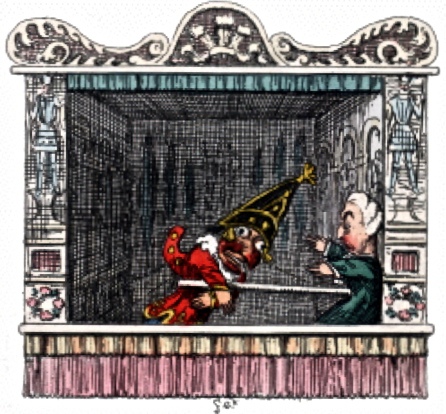
Punch and Pins
Riddley Walker is one of those books which you finish quickly but which continues to seep and creep through your life for months afterwards. It taps into something completely and utterly True. Reading it, you get a sense of something that's both ethereal and able to grab you somewhere roundabouts your gut and heart and wrench you around. Riddley Walker is about a post apocolyptic society, a twelve year old boy, nuclear holocaust, dogs, and much more - but what all of those things add up to create is a book about simply being human.
Anyway, before I explode in a fit of enthusiasm and uneloquent pretentiousness, let me back up what I say. This is Riddley going on about how he can't explain things. Just like me.
'I dont have nothing only words to put down on paper. Its so hard. Some times theres mor in the emty paper nor there is when you get the writing down on it. You try to word the big things and they tern ther backs on you. Yet youwl see stanning stoans and ther backs will talk to you.'
Basically, I signed up to Pinterest the other day, and I don't get it. I don't get Pinterest at all because I don't see the point. It just looks pretty. It doesn't explain or add to anything. Twitter is about linking stuff and sharing information quickly. Facebook is catching up with things. Flickr is about sharing stuff you've made. Pinterest just seems to be telling other people what nice things you like. Creating an image through the creations of other people.
Although basically that's what lots of artists, and ordinary people, have been doing for centuries, stealing bits of things, magpie like, and stuffing them together to make a novel or a song or a painting or even some ridiculous outfit you wear when you're a teenager. But I still couldn't get it even in the context of that. Basically, it was only with Riddley Walker seeping around in my brain that I realised why I didn't like it.
Sometimes just images on their own can do what Riddley's stanning stoans can do and talk to us anyway. But Pinterest doesn't form any sort of coherence, even accidentally. Basically, in a very old-man style rant, I'm going to say that I feel very uneasy about Pinterest, especially as it's becoming massively popular all of a sudden. It's not even putting words down on paper. Or scrawling on it with crayon. It's just lazy, sloppy short hand for being creative. Images talk to you whether they're saying something interesting or not, but then your reaction to that should be to react, not to just go around showing them to everyone else. Otherwise your screen is just a load of pretty pictures but there's still more on the 'emty paper' around them. And that might be the case whatever write or draw or copy and paste - but you should at least try to fill it. Otherwise you're just like poor Riddley, who, for all his noble and beautiful emotion, is just a little boy with a brain poisoned by nuclear waste.
Yes, that's what I'm equating you to. Someone brain-damaged by nuclear holocaust. Please note that I am still using pinterest.
Tuesday, 8 November 2011
Lauren Monaco, illustrated Kerouac haikus.

Sometimes when you get off the sites you spend most on, and just do some random browing, you find really cool stuff. Like this series of illustrations based on Jack Kerouac's haikus. They're one of the best sets of illustrations I've seen in a while. You can follow the artist here on twitter, and she also has an etsy shop.

Friday, 23 September 2011
Jane Eyre grows up

Rejoice, for this post means another picture of Michael Fassbender. I have heard some stupid mutterings that Fassbender is too handsome to play Mr Rochester. To this I say: shut up, don't you know not to look a gift horse in the mouth? Do you really want an ugly man playing him? The ugliest man ever? Chris Moyles? Are his brows heavy enough for you? Is that what you want, Chris Moyles playing Mr Rochester? Do you want to look at Chris Moyles, poncing around in a smoking jacket and putting on a shit Yorkshire accent? No? Then fuck off.
Anyway, I promised that I would talk about Jane Eyre growing up and so I will. Reading on the tube today I came across a passage which is basically a perfect bridge between what I said in my last post and what I want to say here. Jane was still very much a young girl when I last spoke about her, she was terrified about sitting in the room of an inn on her own, doubtful that she has done the right thing in leaving what she knows behind, awkward and scared. Only a few months later, she's coming out with this:
My very conscience and reason turned traitors against me, and charged me with crime in resisting him. They spoke almost as loud as Feeling, and that clamoured wildly. 'Oh comply!' it said. 'Think of his misery; his headlong nature.... soothe him; save him; love him; tell him you love him and will be his. Who in the world cares for you? Or who will be injured by what you do?'What makes her grow up is that she has learned that she is worthy of preservation and, more importantly, she does not need others to help her in this. She can look after herself because she cares for herself - and what she thinks of herself is far more important to Jane than what others think. Who could blame her, when all who are supposed to have supported her - her Aunt, her teachers and her fiance have turned out to be cruel, controlling and deceitful? Jane realises that true contentedness comes from what others have so far denied her: respect. She wishes to stay with Rochester more than anything in the world, but at the same time knows that doing so would make her incredibly unhappy: as a mistress, already deceived by Rochester and deceiving of the rest of the world, she could not respect herself.
Still indomitable was the reply: 'I care for myself.'
So she runs away. She's so upset that she leaves her carpet bag on a coach, and then, instead of sticking to the road, flails all over the moors in the pissing rain. She's completely alone, friendless, possesionless, terrified, but she still presses on, as far away from Rochester as she can get. Her self-control at this point is frighteningly rigid - even begging a woman for a crust of bread and taking pig scraps from a young girl isn't enough to force her back.
She then meets the epitome of self-control and denial of pleasure: the stupidly named and even more stupidly behaving St John Rivers. St John is a rigid-faced, stiff-backed church minister who we come to realise is madly in love with the daughter of a local nobleman. She's madly in love with him, and there are no hurdles in their way apart from St John's solid refusal to allow himself to feel anything for her. She is an unsuitable wife for a minister and hence his principles would be compromised: he is the extreme result of what Jane is trying to achieve.
He realises that the apparantly laced up and passionless Jane would make the perfect wife for him and proposes. Luckily, Jane realises that he is probably the most boring man to have walked the earth, and, despite being tempted by the strength of his religious conviction, she turns him down, screaming that to marry him would kill her. She thinks back to an earlier event in her life:
I was almost as hard beset by him now as I had been once before, in a different way, by another. I was a fool both times. To have yielded then would have been an error of principle; to have yielded now would have been an error of judgmentIn a typically Bronte touch of the sublime, she hears Rochester's voice calling to her over the moors, and resolves to return to Thornfield and find what has become of him. Deciding to do this is when she really grows up: she realises her own feelings are worthy of her own respect: 'It was my time to assume ascendancy. My powers were in play, and in force.' She no longer cares that Rochester is the less worthy of her two suitors, or that he has gone against society's rules in attempting to marry her. She wants and needs him: this is all that matters.
A lot of commentator's I've been reading have made much of the fact that Jane and Rochester meet again in altered states: she is now independently wealthy, he is deformed and (relatively) poor. People think that this equalizes them, but I think that this is missing the point that, in their eyes, they were already equals. They scream this at each other before they first kiss, for heaven's sake. That they change and still have the same relationship afterwards only proves this further: true love.
 |
| Aaaaaaww... |
Thursday, 1 September 2011
A Patient's Tale
Whilst doing some research at work, I came across this - mildly interesting.
I will attempt to up the ridiculous lack of posts on this blog and write something about this later....
http://www.clinpharm.ox.ac.uk/JKA/patientstale
I will attempt to up the ridiculous lack of posts on this blog and write something about this later....
http://www.clinpharm.ox.ac.uk/JKA/patientstale
Subscribe to:
Posts (Atom)